This is the archived version of MPAC's website. For the latest updates, visit mpac.org.

public health

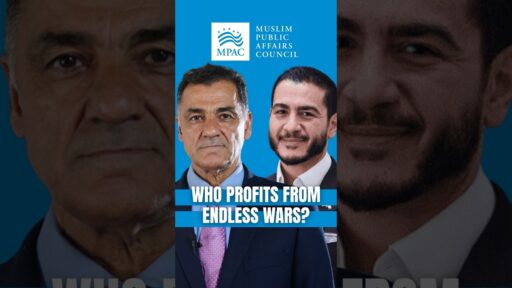
Abdul El-Sayed: Why Trillion-Dollar Wars Always Get Funded

Videos
Abdul El Sayed
Healthcare Reform
Human Security
Military Industrial Complex
mpac
muslim public affairs council
National Security
public health
salam al-marayati
The MPAC Podcast with Salam Al-Marayati
US foreign policy
On September 7, 2026 By MPAC
In this clip from the 2020 MPAC webinar series, host Salam Al-Marayati and Dr. Abdul El-Sayed break down the vital shift from traditional military "national security" to authentic "human security". El-Sayed exposes why trillion-dollar military expenditures receive effortless political backing while funding basic human wellbeing remains an uphill fight: war generates massive corporate profit, while investing in human healthcare and community infrastructure does not. NOTE: MPAC Foundation, MAS PACE, & ICSC are nonpartisan 501(c)(3) organizations. This candidate forum is conducted solely for voter education and does not constitute an endorsement of, opposition to, or support for any candidate, political party, or campaign. The views expressed by participating candidates are their own and do not necessarily reflect the views of MPAC Foundation, MAS PACE, or ICSC. Subscribe to MPAC's channel: http://bit.ly/MPACYouTube Like MPAC on Facebook: http://fb.com/mpacnational Follow MPAC on Twitter: http://twitter.com/mpac_national Follow MPAC on Instagram: http://instagram.com/mpac_national Visit MPAC's website: http://mpac.org About the Muslim Public Affairs Council (MPAC) We improve public understanding and policies that impact American Muslims by engaging our government, media, and communities. Help us to continue this work by making a donation today: http://mpac.org/give.
Read more

National American Muslim Policy Conference: Health Policy & Advocacy Priorities for American Muslims

Videos
democracy
equity
health policy
muslims
pluralim
public health
On June 10, 2022 By MPAC
When it comes to health equity, many Muslims have seen firsthand the importance of advocating for health equity. At the 2022 National American Muslim Policy conversation, we discussed why it's crucial for Muslims to be accounted for in decisions that impact healthcare access, actions taken by Muslims to address healthcare gaps, additional needs in the community and potential future directions. This panel was moderated by Sana Syed, Vice President, American Muslim Health Professionals and featured Dr. Aasim Padela, Director of the Initiative on Islam and Medicine, MacLean Center for Clinical Medical Ethics, Dr. Adel Syed, CEO, Umma Clinic, and Dr. Quaiser Abdullah, Assistant Professor in the Communication and Social Influence Department in Klein College of Media and Communication at Temple University. MPAC co-hosted the inaugural National American Muslim Policy Conference which brought together elected officials, experts, and leaders from across the nation to discuss our community's policy priorities and needs. We are proud to have worked alongside American Muslim Health Professionals, Institute for Social Policy and Understanding, Illinois Muslim Civic Coalition, and Emgage Action as part of the Community Collaborative Initiative. The Community Collaborative Initiative, a community-based action research project hosted by Indiana University's Lilly School of Philanthropy, we cordially invite you to participate in the inaugural National American Muslim Policy Conference. ---------- Subscribe to MPAC's channel: http://bit.ly/MPACYouTube Like MPAC on Facebook: http://fb.com/mpacnational Follow MPAC on Twitter: http://twitter.com/mpac_national Follow MPAC on Instagram: http://instagram.com/mpac_national Visit MPAC's website: http://mpac.org About the Muslim Public Affairs Council (MPAC) We improve public understanding and policies that impact American Muslims by engaging our government, media, and communities. Help us to continue this work by making a donation today: http://mpac.org/give.
Read more